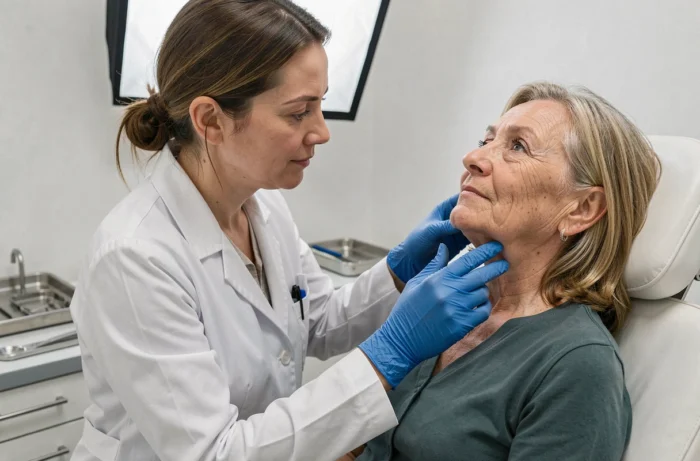
Wrinkle power filling refers to a set of techniques and cosmetic products designed to fill wrinkles, whether they are concentrated topical creams or needle-free devices inspired by professional injections. The market for these anti-wrinkle treatments is experiencing rapid growth, driven by social media and the promise of an immediate lifting effect at home. Reports of serious adverse effects are increasing in parallel, prompting health authorities to tighten regulatory frameworks.
Needle-free pens and filling creams: what these products really contain
Devices like the Hyaluron Pen project hyaluronic acid under pressure through the skin, without a needle. The principle is appealing, but the depth of penetration and the amount injected remain difficult to control outside a medical setting. The pressure applied can cause vascular damage that the user may not detect immediately.
The creams and serums labeled “wrinkle power filling” rely on active ingredients such as collagen, low molecular weight hyaluronic acid, or certain peptides. Their ability to penetrate the skin barrier is limited compared to an injection. The visible filling effect, often temporary, relies more on superficial swelling of the epidermis than on deep restructuring of the dermis.
One point deserves attention: the exact composition varies significantly from one product to another. Some formulations contain ingredients classified as risky by consumer protection organizations. Checking the INCI list before any purchase remains the only reliable precaution at this stage, as marketing claims (“injectable effect,” “immediate filling”) lack any harmonized regulatory definition.
To better understand wrinkle power filling and its dangers, it is essential to clearly distinguish topical cosmetic products from medical filling devices, as the risks are not at the same level.
Documented serious complications after filler injections in high-risk facial areas
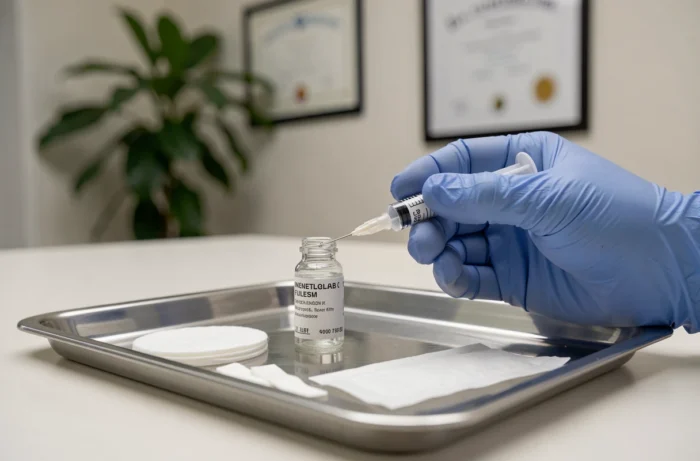
The most concerning data relates to injections of filler products, including those performed with needle-free devices, in specific areas of the face. The glabella, nose, forehead, and nasolabial folds are classified as “danger zones” by medical literature due to their direct connection to the vascularization of the eye and brain.
A report from the American Academy of Ophthalmology published in 2025 documented 198 cases of blindness related to fillers, with 83% involving hyaluronic acid-based products and 15% involving autologous fat. The same report documents a 509% increase in cases of blindness related to forehead fillers between 2018 and 2023.
These figures mainly concern injections performed by practitioners, but the needle-free devices used at home pose an additional problem: the user’s lack of anatomical training. Without precise knowledge of the facial vascular network, the risk of arterial occlusion significantly increases.
ANSM (National Agency for the Safety of Medicines) reminds us that the frequency of serious adverse effects from injectable filling products is between 0.1 and 1% of patients. Reactions are classified into several temporal categories:
- Immediate reactions (1 to 15 days): hematoma, erythema, edema, with an estimated duration of about 8 days
- Semi-delayed reactions (15 days to 3 months): infection related to aseptic conditions, necrosis, non-specific inflammation
- Delayed reactions (3 to 24 months and beyond): allergy, pigmentation, and in the rarest cases, the appearance of granulomas that may become permanent, particularly associated with non-resorbable products
French regulatory framework: tightening since 2024 for non-medical aesthetic treatments
A decree from May 2024 in France has strengthened the regulation of aesthetic procedures performed outside a medical framework. Devices like the Hyaluron Pen, when used to project substances under the skin, now fall under stricter regulation. Several beauty institutes have been subject to inspections and closures for the illegal practice of aesthetic medicine.
At the European level, hyaluronic acid-based wrinkle fillers are classified as class III medical devices under the MDR (Medical Device Regulation). This classification imposes high requirements for clinical evaluation and traceability, meaning that any product sold as “cosmetic” but presented as an injection substitute finds itself in a legal gray area.

The case of a death that occurred in a beauty institute in Nice, reported by several French media outlets, illustrates the potential consequences when invasive treatments are performed without medical qualification. Wrinkle filling procedures by injection or pressure device can only be legally performed by a doctor or under their direct supervision.
Wrinkle power filling at home: concrete precautions before using an anti-wrinkle product
For topical treatments (creams, serums), the main risk is not vascular but dermatological: allergic reactions, irritations, or exposure to undesirable ingredients identified by organizations like Que Choisir. Consulting public databases that list toxic substances in cosmetics helps eliminate problematic formulations.
For needle-free devices sold online, caution is essential. Several verification points are necessary:
- Ensure that the product bears a CE marking compliant with the European regulation on medical devices, and not just a cosmetic marking
- Never use a pressure device on areas identified as dangerous (nose, glabella, forehead) without prior medical advice
- Prefer a treatment performed by a qualified healthcare professional rather than self-use guided by online tutorials
Field reports vary on the actual effectiveness of filling creams compared to professional injections. A topical anti-wrinkle serum does not replace a medical filling procedure, regardless of the promises displayed on the packaging. The distinction between cosmetic care and medical act remains the determining criterion for assessing both the expected effectiveness and the level of risk involved.
Wrinkle power filling illustrates an underlying trend: the democratization of aesthetic gestures once reserved for medical offices. This new accessibility comes with a transfer of responsibility to the consumer, who must now independently distinguish a skincare product from a potentially dangerous medical device. Reading the INCI list, checking the regulatory status of the product, and consulting a dermatologist remain the three most reliable actions before any use.