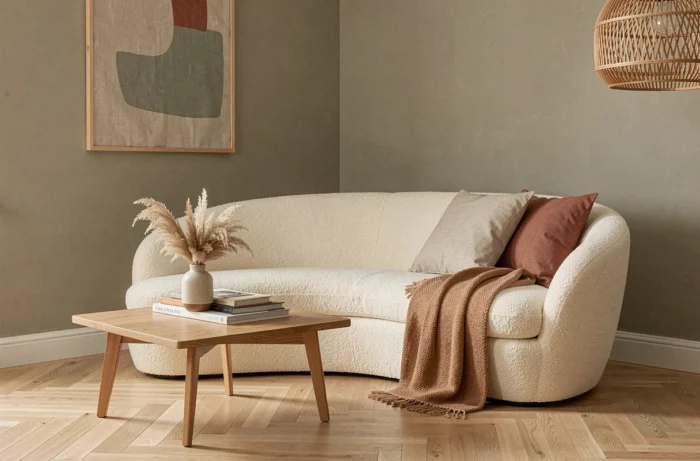
The home décor market is navigating a period of tension between aesthetic renewal and growing awareness of materials. Color palettes change with each season, natural materials are gaining ground in catalogs, and styles are mixing more freely than before.
At the same time, the idea of “fast décor” is coming under scrutiny: the growing number of decorative purchases generates volumes of waste comparable to those of fast fashion. Between the desire for change and the need for sustainability, today’s home décor trends call for a more demanding balance than they might seem to at first.
Indoor air quality and finish choices: the invisible factor in home décor
Trend articles are quick to discuss terracotta paints, textured wall coverings, and wallpaper adhesives. They rarely mention that these interior decorating products are subject to labeling that rates their emissions of volatile substances, from A+ to C. Paints, fillers, adhesives, insulation: every product applied in a living space emits volatile organic compounds for weeks, sometimes months.
This label, displayed on the packaging, indicates the level of emissions. A product rated A+ emits very few pollutants. A product rated C emits considerably more. To follow Ambiance et Déco’s latest news and trends without compromising the air quality at home, this factor deserves to be part of the purchasing decision, alongside color and texture.
The label alone does not guarantee healthy air. Home ventilation, room size, and the combined effect of several new products installed at the same time are at least as important.
Renovating a bedroom by changing the paint, flooring, and synthetic curtains all at once multiplies the sources of emissions. Spreading the work over time or choosing low-emission materials for the largest surfaces (walls and floors) reduces exposure without sacrificing the desired decorative effect.

Durable, repairable furniture: choosing pieces that last through many stages of life
The trend toward natural materials (solid wood, rattan, linen), championed by most home décor experts, also addresses a more practical concern: a piece of furniture that can be dismantled and repaired can last through several stages of life. A guide published in Maison & Travaux in October 2026 recommends checking whether spare parts or replacement covers are available before buying.
This advice changes how we assess furniture. A sofa with an easily dismantled frame can be reupholstered, moved without damage, or resold with new covers. A solid wood table with a top that can be sanded and refinished retains its usefulness for decades. By contrast, a piece of furniture that is glued, stapled, or molded as a single unit becomes waste as soon as its finish wears out.
What to check before buying a piece of home décor furniture
- Can the frame be dismantled without special tools, and can the fasteners be replaced?
- Does the manufacturer offer replacement covers, tabletops, or legs that remain compatible for several years?
- Can the main material (wood, metal, ceramic) be restored by sanding, painting, or surface treatment?
- Will the dimensions fit through standard doorways when moving, without destructive dismantling?
Applying these criteria does not mean giving up on style. Current collections in wood, brushed metal, and natural fabrics often meet these requirements precisely because their materials are easy to maintain and transform.
Secondhand and reclaimed materials in home décor: traceability and practical limits
Secondhand furniture has become a go-to choice for décor enthusiasts, driven by vintage aesthetics and resale platforms. The selection has exploded, but reusing materials in renovation projects also requires traceability, not just good taste. Reclaimed materials (old parquet flooring, cement tiles, woodwork) used in a renovation can raise insurance and compliance issues if their origin and technical specifications are not documented.
This limitation is rarely discussed in inspiration articles. General recommendations in favor of natural or reclaimed materials often overlook the fact that tradespeople who install reused materials assume liability. Without a technical data sheet or proof of origin, some ten-year construction liability insurance policies may exclude coverage for the work concerned.
Secondhand décor: what works without the risk
Decorative items in the strict sense (lighting, mirrors, frames, tableware, textiles) do not raise these traceability issues. They are not incorporated into the building structure and do not involve a construction warranty. Choosing secondhand accessories and traceable new materials for renovation work is a pragmatic compromise.
For furniture, secondhand works particularly well for solid wood, metal, and ceramic pieces, whose condition can be checked visually. Furniture with composite frames or old seat foam calls for greater caution: foam loses density over time, and sagging upholstery is not always replaceable at a reasonable cost.
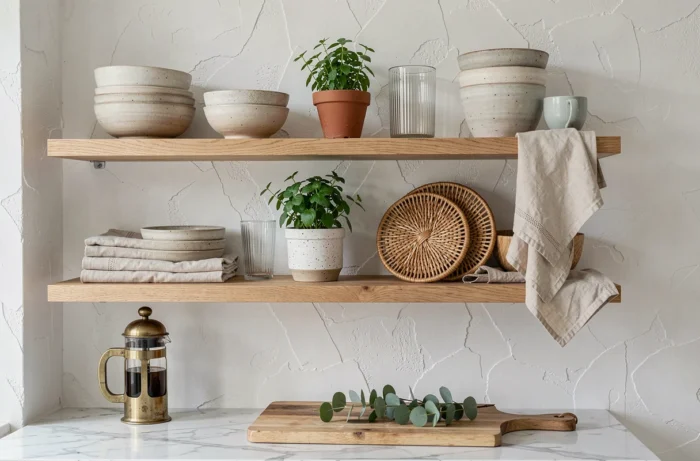
Art of living and understated décor: fewer purchases, more considered choices
The proliferation of seasonal micro-trends encourages people to frequently replace cushions, candles, and small decorative objects. This pattern brings the mechanisms of fast fashion into the home. The lifespan of objects is becoming just as important to home décor as their appearance.
In this context, making considered choices means focusing the budget on a few key pieces (a light fixture, a rug, a seat) selected to last, and accepting that the rest of the room will evolve gradually. A well-chosen wall color can transform a space just as dramatically as a new furniture set, at a fraction of the cost and waste.
Today’s color trends, whether they lean toward warm, earthy tones or soft neutrals, have one thing in common: they work as stable backdrops, where a single statement piece (a colorful armchair, artisanal ceramic, or wall textile) is enough to create a distinct identity. This less-is-more approach creates interiors that feel more cohesive and personal than a buildup of trendy pieces.
Decorating a home in 2026 involves choices that go beyond color palettes and furniture styles. Material emissions, furniture repairability, and the traceability of reused materials: these technical factors determine the true quality of a living space. Ignoring them means confusing the image of a home with the experience of living in it.