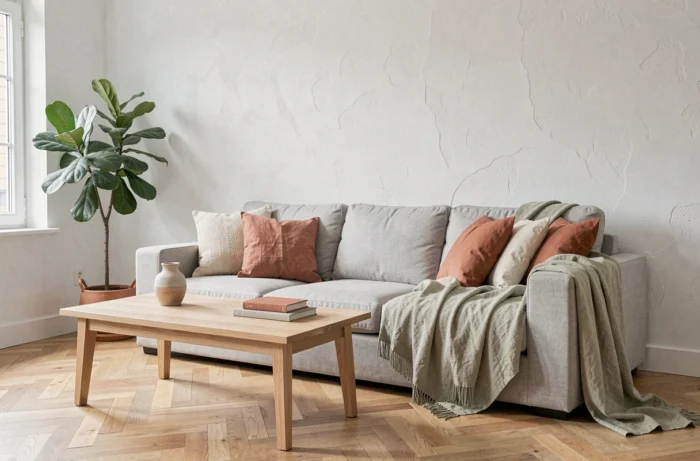
When deciding to refresh a living room or kitchen, the first instinct is often to browse through dozens of pages without a guiding thread. We accumulate screenshots, hesitate between three color palettes, and the project stagnates. The problem is not a lack of inspiration, but the absence of a method to sort what works in one’s own space.
Second-hand and renovated furniture: interior decoration changes its economic model
Before discussing colors or styles, we must look at how the way the French furnish their interiors has changed. The second-hand furniture market reached approximately 1.3 billion euros in 2025 according to a Leboncoin Solutions Pro study published in June 2026. One in four pieces of furniture sold is now second-hand.
This shift has a direct impact on decoration. When we hunt for a 70s dresser or a rattan chair, we are not replicating a catalog interior. We compose with what we find, which encourages mixing eras and materials in a less predictable way.
To follow this evolution and structure choices, the trends and news from CallMeSpring offer a guiding thread that goes from the kitchen to the living room. The idea is not to copy a style, but to identify enduring directions.
Another point to keep in mind: 71% of the French say they have no problem buying second-hand furniture. We are no longer in a niche. Ignoring this reality when planning decor means missing out on solid options at a lower cost.

Colors and materials: balancing trend and durability in each room
We see it every season: new color palettes emerge, driven by social media or trade shows like Maison&Objet. The trap is to repaint a wall in an ultra-trendy shade only to find it dated eighteen months later.
Paint and resin in the living room
For a living room, paint remains the most accessible decor lever. Terracotta shades and muted greens continue to work because they pair well with light wood as well as black metal. Decorative resin, applied to a piece of furniture or a countertop, allows for a fresh look without replacing the base.
Favor neutral shades on large surfaces (walls, floors) and reserve bright colors for items that can be easily changed (cushions, lighting, frames) to limit the risk of fatigue.
Material choices in the kitchen
The kitchen is the room where materials face the most constraints: heat, humidity, splashes. Ceramic tiles are making a comeback, valued for their durability, along with treated solid wood for countertops. Opinions vary on the durability of high-end laminate against repeated impacts, but it remains an economical option for a quick refresh.
- Ceramic tiles: stain and heat resistant, suitable for kitchen backsplashes and floors.
- Oiled solid wood: adds visual warmth, requires regular maintenance (oil or wax every six months or so).
- Epoxy resin: allows for covering an old countertop without removal, fully dries in a few days.
Natural and artificial light: reorganizing a space without heavy renovations
Light transforms a room more radically than a change of furniture. In a north-facing living room, no white paint will compensate for poorly thought-out lighting.
Placing light sources at three different heights (floor, table, ceiling) creates a depth that a ceiling fixture alone does not provide. A floor lamp, a low pendant above the table, a recessed light high up: this layering is enough to redefine the ambiance without touching the walls.
Mirrors remain an underestimated tool. Positioned opposite a window, they redistribute natural light throughout the room. In a narrow entryway, a large mirror placed on the floor against the wall gives an immediate sense of space.
Wallpaper and texture play to compensate for lack of light
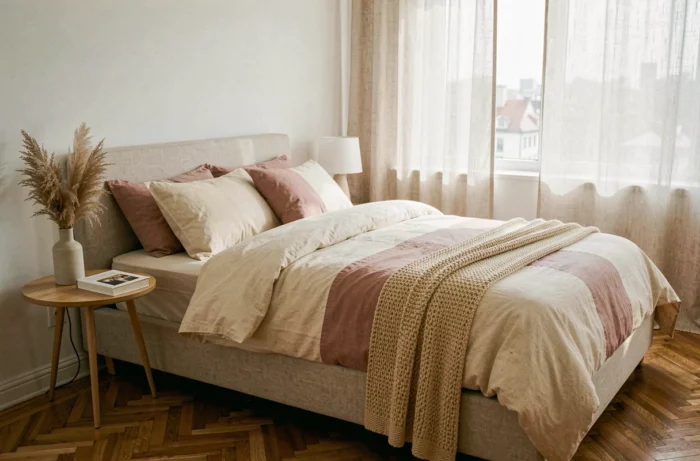
Light-patterned wallpaper (botanical, discreet geometric) reflects light better than dark or matte wallpaper. It can be applied to a single wall to create a focal point without weighing down the room. A light wallpaper on the wall facing the window amplifies brightness much more than satin paint.
Living room and bedroom decoration: mixing styles without losing coherence
Mixing styles has become the norm, but without a guiding thread, one ends up with a jumble rather than a personal interior. The simplest operational rule: choose a dominant material and stick to it throughout the room.
- A living room built around light wood can accept a colorful velvet sofa, linen cushions, and a jute rug. The wood remains the binding element.
- A bedroom centered on textiles (washed linen, wool, thick cotton) can tolerate a bedside table in metal or marble without losing its softness.
- A space oriented towards metal and glass (industrial style) benefits from integrating one or two pieces in raw wood to avoid coldness.
One dominant material per room prevents the mix from turning into a catalog. Colors and eras can vary, as long as this guiding thread remains visible.
Young French people are rediscovering designer furniture rather than low-cost options, according to several recent market analyses. This return to durable pieces (vintage armchair, solid wood table, designer lighting) fits perfectly into a mixed decor where each piece of furniture has been chosen, not endured.
Decorating an interior with style does not require an unlimited budget or a design education. One guiding material per room, three-layered lighting, embraced second-hand purchases, and regular monitoring of enduring trends are enough to transform an ordinary dwelling into a personal and coherent space.