Interior decoration works in cycles of a few years, where materials, palettes, and shapes respond to each other. In 2026, these cycles converge towards a specific point: the return of dark textures, shiny surfaces, and earthy tones, driven by a desire for warmth and sustainability in living spaces. Understanding these decor trends allows for transforming a room without engaging in heavy renovations.
Shiny surfaces and dark wood: two decorative materials redefining volumes
The hallmark of this year is not found in colors, but in finishes. Two surface treatments are making a strong comeback in furniture and layout: glossy finish and dark wood, such as walnut or stained oak.
The glossy finish affects the perception of space. A console, a TV unit, or a closet door with a shiny finish reflects ambient light and visually enlarges the room. This effect works particularly well in narrow entries and compact kitchens, where the reflective surface compensates for the lack of windows.
Dark wood plays the opposite role: it anchors a space and gives it depth. Bookshelves, dining tables, mirror frames—pieces made of dark wood serve as focal points in a room with light walls. The combination of the two, a light lacquered piece against a dark wood paneled wall, creates a contrast that several design brands are highlighting this season.
To keep up with the latest on Kali News, these combinations of finishes are among the most documented this year, with variations piece by piece.
Color palette 2026: understanding the shift towards warm tones
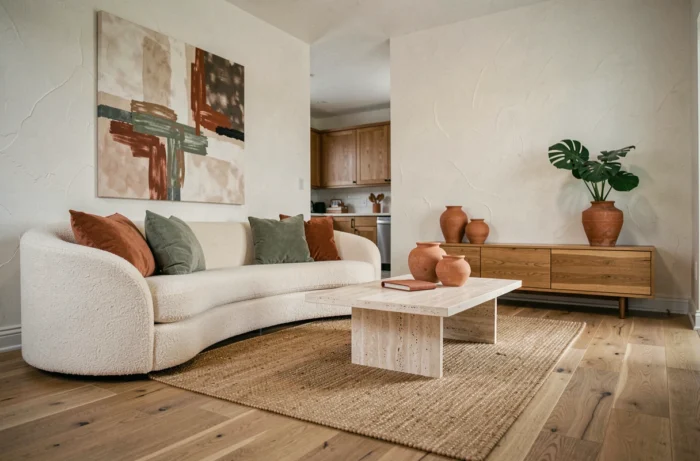
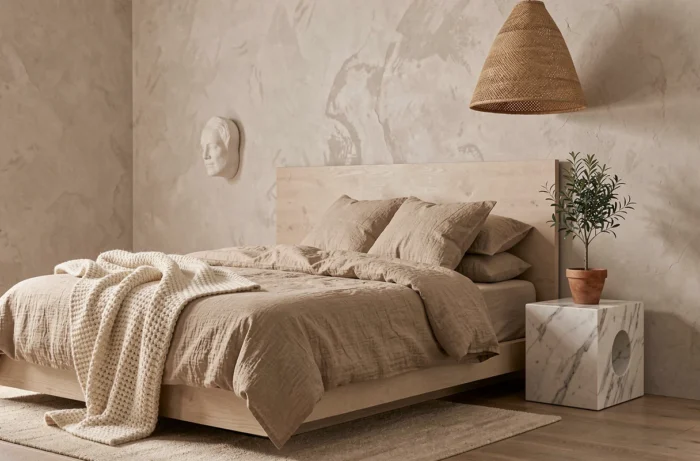
The dominant palette is organized around three families. Warm and earthy tones (terracotta, ochre, caramel brown) take center stage. They appear on walls, textiles, and small furniture. Neutral tones (beige, sand, warm gray) serve as a permanent backdrop, compatible with any accessory changes.
Bright color accents work as highlights, not as flat colors. A coral cushion, a butter yellow vase, a pistachio throw are enough to energize a living room without requiring repainting. This accent logic allows for following trends without heavy commitments.
Sky blue and sage green: the two outsiders
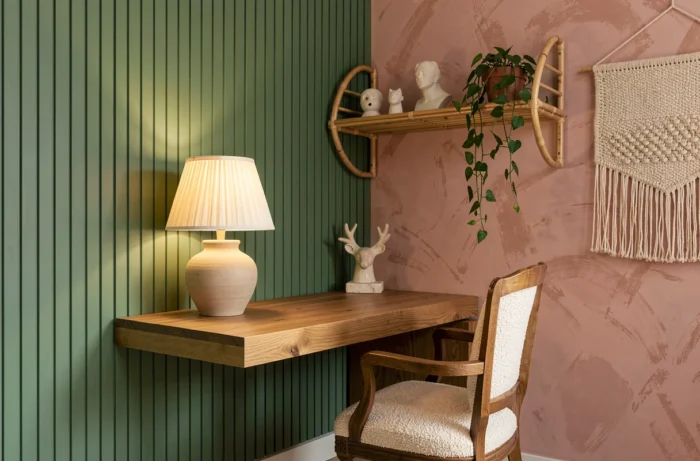
Outside of earthy tones, two colors are gaining ground in bathrooms and bedrooms. Sky blue brings immediate freshness, while sage green acts as a plant-based neutral, compatible with light wood and handcrafted ceramics. These two shades share a characteristic: they work equally well as wall paint and home textiles, making them accessible without renovation.
Faux fur and amber glass: textures that change the ambiance of a room
Beyond color, texture dictates the feel of an interior. Two materials stand out this year for their ability to transform the atmosphere of a room with a single object.
- Faux fur is making a comeback in throws, seating, and rugs. Current versions mimic short, dense textures, far from the long furs of previous years, with an ethical positioning embraced by manufacturers.
- Amber glass is appearing in lighting fixtures, vases, and carafes. Its warm hue filters light and creates a retro ambiance without resorting to a complete vintage style. A single amber glass light fixture is enough to change the perceived color temperature in a living room or dining area.
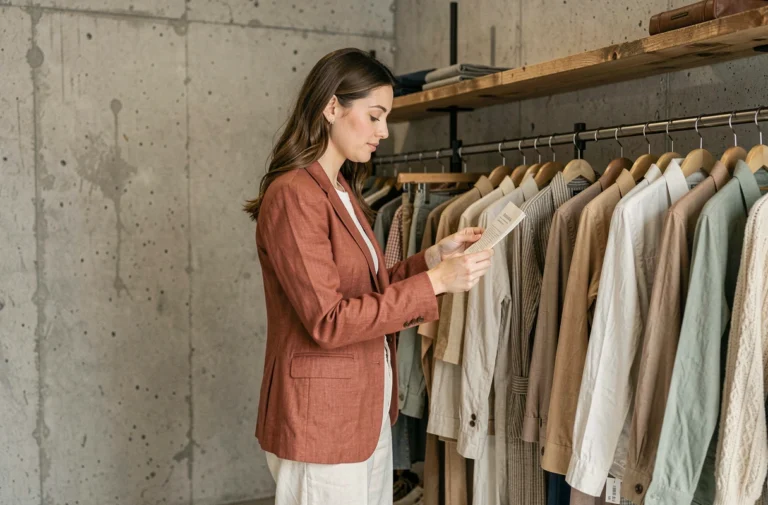
- Washed linen and raw cotton maintain their place in bedding and curtains, complementing more pronounced textures. Their role remains that of a neutral and tactile base.
The guiding idea is layering: combining in the same space a smooth material (lacquered, glass), a textile material (linen, faux fur), and a raw material (wood, ceramics). Three different textures in the same room are enough to create visual richness without overwhelming the decor.
Energy renovation and interior decoration: a constraint turned decor parameter
A factor rarely addressed in decor inspiration articles weighs heavily on the concrete choices of homeowners: the changes to MaPrimeRénov’. Recent adjustments to the program refocus assistance on homes rated E, F, or G in energy performance diagnostics, gradually excluding isolated works (windows alone, VMC, attics) from the process by gesture.
This orientation pushes towards global renovations that modify the very structure of rooms: redistributing volumes after interior insulation, repositioning openings, replacing heating systems that free up floor space. Decor choices come after these technical works.
What this changes for material choices
A highly efficient envelope (enhanced insulation, triple glazing) alters the thermal behavior of a room. Decorative materials must then be compatible with effective mechanical ventilation: low VOC paints, breathable textiles, flooring that does not trap moisture. Solid wood and ceramics naturally meet these constraints, which partly explains their dominance in current trends.
According to the Anah report for the first half of 2026 published by Argile, the volume of substantial assisted renovations has significantly decreased, which hinders many households’ ability to deeply transform their interiors. Light decor trends (textiles, lighting, small furniture) then make perfect sense: they allow for refreshing a space without relying on a renovation project.
The choice between a cosmetic decor project and a structural transformation thus depends as much on the energy performance rating of the home as on the available budget. An apartment rated D or better offers immediate decorative freedom; a home rated E, F, or G requires thinking about insulation before painting.