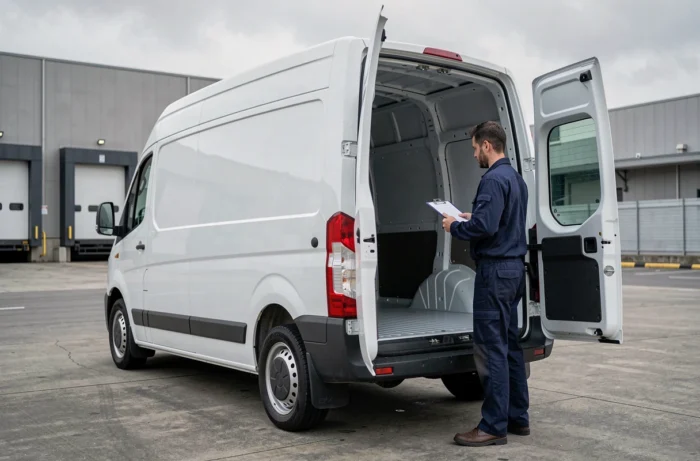
An L2H2 van offers an average cargo length combined with a raised roof, while an H3 denotes an even taller roof, often available in L2 or L3. The difference between these two configurations lies in a few dozen centimeters of interior height, but the implications for daily use, budget, and regulations are much broader than just a simple volume difference.
Interior Height and the 2.50 m Threshold: What Changes with the H3 Upgrade
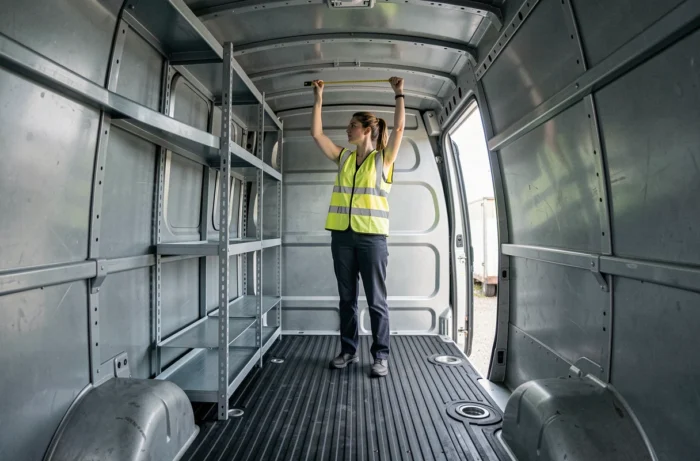
The letter H followed by a number indicates the height of the van’s roof. An H2 corresponds to a raised roof, while an H3 has a very high roof. In L2H2 configuration, the interior height is generally around 1.90 m, sufficient for standing in most cases.
Switching to H3 adds about twenty centimeters of usable height under the ceiling. The comfort of working or living on board is transformed, especially for a van conversion or a mobile workshop setup.
The key technical point to remember concerns the total exterior height. An H3 van often exceeds 2.50 m overall, which changes the toll class on highways and complicates access to certain underground or covered parking areas. An L2H2, by staying below this threshold or just at the limit, maintains urban versatility that the H3 partially loses.
Before making a choice, a comparison of L2H2 and H3 vans allows for a precise visualization of the dimensional differences between the main models on the market.
Usable Volume L2H2 vs. L2H3: Real Gains and Load Limits
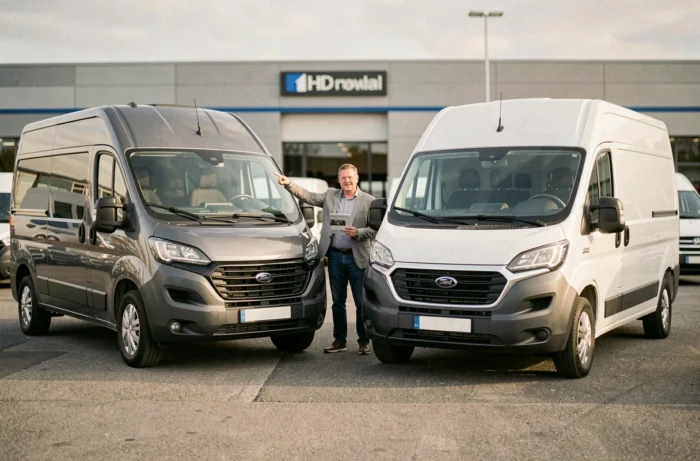
The loading volume is the most consulted criterion when choosing a van. On a Renault Master, the L2H2 configuration offers about 10.8 m³ of usable volume, compared to 12.3 m³ in L2H3. The gain is therefore around one and a half cubic meters, entirely distributed across the height.
This additional volume benefits bulky but lightweight loads (insulation, boxes, disassembled furniture). For dense and heavy loads, the maximum authorized weight (PTAC) remains the same between H2 and H3 on the same mechanical base. In other words, gaining volume in height does not mean being able to carry more weight.
On a Fiat Ducato L2H2, the usable volume reaches about 11.5 m³, with one of the most generous wheel arch widths in the segment. This width is just as important as height for loading pallets or flat furniture.
Volume/Manoeuvrability Ratio: L2H2 as the Pivot Format
The L2H2 is establishing itself in 2025-2026 as the reference format for professionals alternating between urban deliveries and peripheral interventions. Its usable interior length (around 3 m on a Master) remains compatible with most standard parking spaces, whereas an L3H3 extends the vehicle by several dozen centimeters and significantly increases the turning radius.
For a tradesperson making mixed deliveries, the L2H2 offers the best volume/footprint ratio. The H3 is justified when the job requires working standing inside the vehicle (plumber, mobile electrician) or when the layout includes a loft bed.
Low Emission Zones and Engine Type: A Priority Criterion in 2026
Low Emission Zones significantly alter the purchasing equation for a van, regardless of its size. A diesel van L2H2 or H3 registered between 2006 and 2010 carries a Crit’Air 3 sticker, which theoretically makes it subject to restrictions in the strictest LEZs like Paris or Lyon.
A recent vehicle classified as Crit’Air 1 or 2 (recent petrol, hybrid, or electric) can circulate without restrictions in all current LEZs. This parameter weighs as heavily as the H2/H3 choice in the purchasing decision, especially for a used van.
Electric Van: What Impact on Size Choice
The electric versions of large vans (e-Master, e-Ducato, eSprinter) primarily exist in L2H2. The offer for electric H3s remains more limited. The weight of the batteries reduces the available payload, making the volume gain of the H3 less usable in electric than in thermal.
For urban use in LEZs, the electric L2H2 thus represents the most coherent compromise between range, payload, and regulatory access.
Concrete Purchase Criteria to Decide Between H2 and H3
The choice between these two roof heights rarely comes down to volume alone. Several parameters deserve to be evaluated together:
- The nature of the cargo: heavy and compact materials gain no benefit from an H3, while bulky and lightweight loads fully exploit the additional height.
- The use of the vehicle as a workspace: a mobile workshop or a van layout with standing room justifies the extra cost and constraints of the H3.
- Access constraints: covered parking, delivery zones in city centers, highway tolls. An H3 that cannot pass under a height bar imposes daily detours.
- The budget: with identical engine and length, the H3 costs more to purchase. The depreciation on the used market also varies according to local demand.
A final often overlooked point concerns wind resistance. An H3 van consumes significantly more on the highway than an H2 of the same length, due to the increased frontal area. On long and regular trips, this overconsumption impacts the annual fuel budget.
The ideal size thus depends less on a general classification than on a precise analysis of one’s own terrain, regulatory, and loading constraints. A well-utilized L2H2 covers the majority of professional and van life needs, while the H3 remains a targeted technical choice, relevant when the interior height truly conditions the activity.