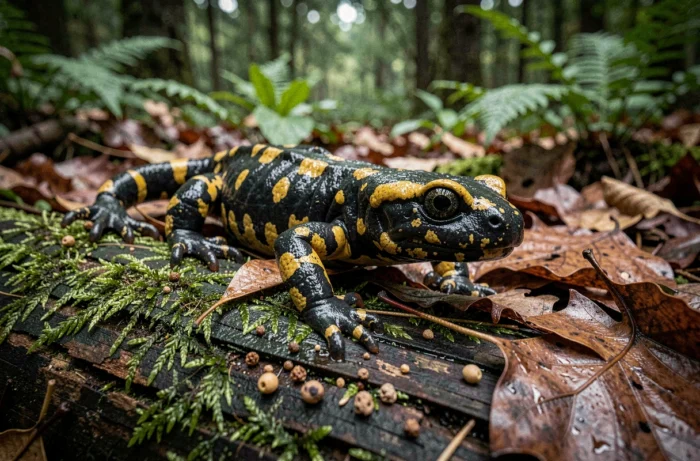
On a damp forest trail, a small dark cylindrical mass catches the eye between two dead leaves. For most walkers, it’s an uninteresting detail. For a field naturalist, this salamander droppings is an open-air biological sample, capable of providing data on the diet, health, and even the genetic identity of the animal that left it.
Salamander droppings measure a few millimeters long, are often darkish, and contain fragments of invertebrate exoskeletons. They can easily be mistaken for droppings from a lizard or a small toad. Their analysis, which was once anecdotal, is now increasingly taking place in amphibian monitoring protocols across Europe.
Salamander fecal DNA: identifying an individual without capturing it
In the field, capturing a spotted salamander to take a genetic sample poses a concrete problem: the stress of handling can trigger the secretion of skin toxins, and repeated handling disrupts local populations. Droppings offer a direct alternative.
The DNA contained in feces allows for the identification of the species, individual, and sometimes the sex of the salamander. This way, one can estimate the size of a population at a given site without ever touching a single animal. This non-invasive approach transforms each dropping into an exploitable data point for conservation programs.
The main constraint remains the freshness of the sample. A dropping exposed to rain or sun for several days quickly loses its exploitable DNA. Nighttime wildlife monitoring protocols now incorporate this criterion: only fresh feces can distinguish an active passage from an old sign.
In practice, surveys are targeted early in the morning, after humid nights when salamanders are most mobile. To learn everything about salamander droppings, one must first understand this genetic dimension that goes far beyond mere naturalist curiosity.
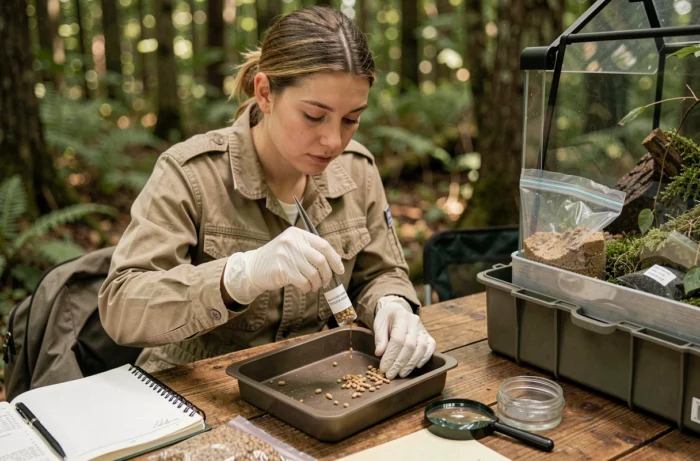
Diet and contamination: what salamander droppings reveal
When dissecting a salamander dropping under a binocular microscope, recognizable remains can be found: beetle legs, ant mandibles, fragments of pill bugs, and sometimes pieces of snails. This content acts as a natural food diary, but its significance goes beyond a simple list of prey.
The composition of the droppings reflects the state of the local ecosystem. If fragments of a certain type of prey disappear from one season to the next, it serves as an alert signal regarding the soil microfauna. This principle is used to assess habitat quality without setting traps for invertebrates, significantly simplifying field campaigns.
Pollutant traces in feces
Droppings also serve as indirect markers of chemical contamination. A salamander that consumes invertebrates exposed to pesticides or heavy metals concentrates these substances in its body. The residues are partly found in the feces. Analyzing these droppings allows for mapping the presence of pollutants in a forest environment without directly sampling the soil or water.
Feedback on this point varies among teams: the sensitivity of the analyses depends greatly on the laboratory and the sample preservation protocol. The method remains complementary to traditional soil analyses, not substitutive.
Monitoring the Bsal fungus through salamander feces
The fungus Batrachochytrium salamandrivorans, known by the abbreviation Bsal, poses a major threat to European salamander populations. This pathogen, likely originating from Asia, causes fatal skin lesions in many species of urodeles. Early detection at a site is a race against time.
Feces provide a complementary detection vector to identify the presence of Bsal in a given environment. Analyzing fecal matter can reveal traces of the pathogen even before clinical symptoms are visible on the animals. This approach is integrated into biosurveillance programs that map the progression of the fungus at a regional scale, particularly in the Netherlands and Belgium, where the first massive mortalities have been documented.
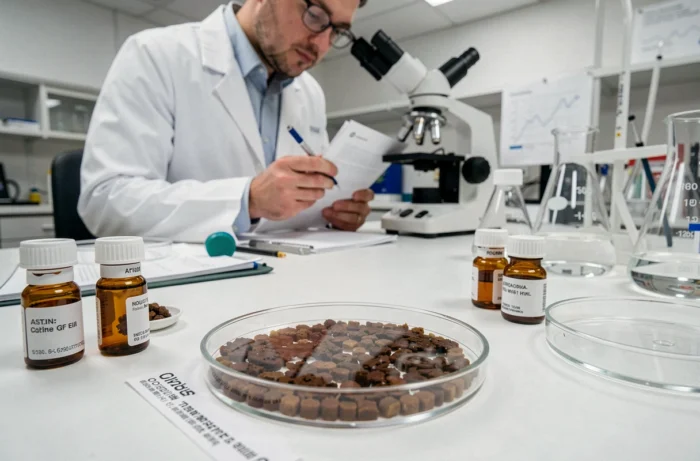
In the field, the protocol combines several types of indicators:
- Collection of fresh feces for DNA analysis and pathogen search, ideally within hours of deposition
- Skin swabbing of observed live individuals, for comparison with fecal results
- Photographic recording of individuals showing visible lesions, geolocated to feed into regional databases
The combination of these three data sources provides a much more reliable picture than a single isolated type of sampling.
Salamander droppings and mapping local biodiversity
Biodiversity monitoring programs are no longer limited to visual counting of individuals. The confirmed presence of salamanders at a site, evidenced by fecal indicators, feeds into regional databases that guide forest management and land-use decisions.
Each geolocated dropping enriches a living map of amphibian distribution. By cross-referencing this data with floristic and soil surveys, an ecological portrait of the site is obtained that goes far beyond the mere presence of the species. Natural space managers use this information to delineate buffer zones, adjust forestry work periods, or justify the creation of ecological corridors.
The salamander, due to its sensitivity to habitat changes, serves as a reliable bio-indicator. When its fecal traces disappear from an area where they were regular, it is often the first signal of environmental degradation, even before other species show visible decline.
- Detection of a gradual drying out of underbrush through the dwindling presence indicators
- Assessment of the impact of logging on soil fauna in the following months
- Monitoring the recolonization of a site after the restoration of a wetland area
Salamander droppings are not a niche topic reserved for passionate herpetologists. They contribute to a monitoring network that connects molecular biology, ecotoxicology, and natural resource management. The next time a small dark cylinder appears on a forest path, it may carry within it the genetic identity card of its author, a health report of the soil, and a warning signal about a progressing pathogen.