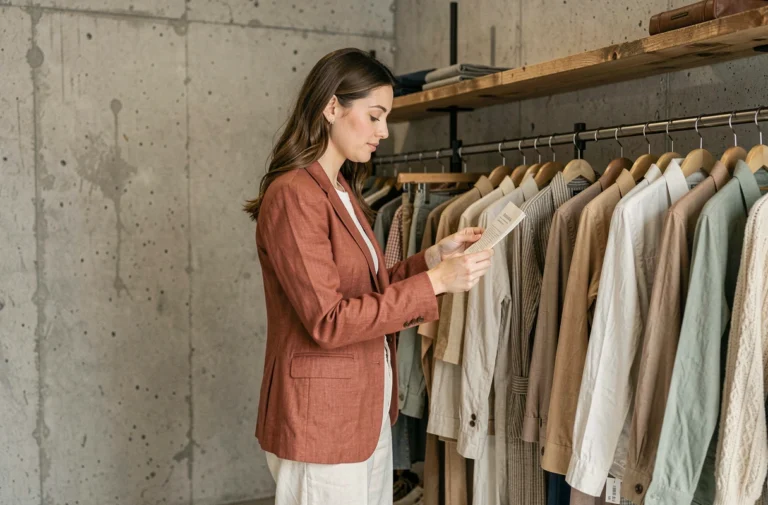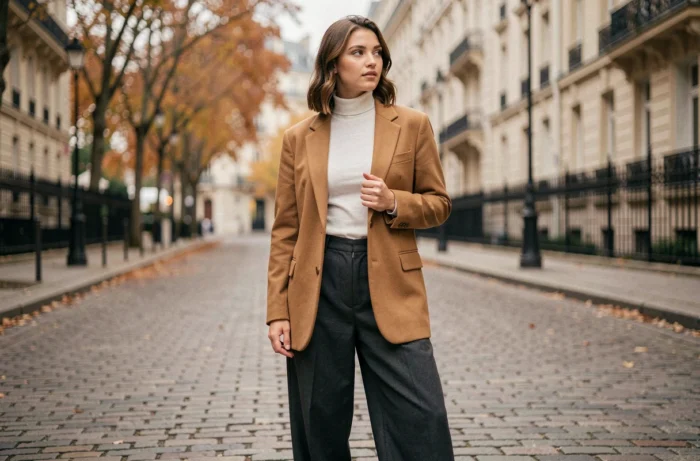
The fashion trends for 2026 are structured around two opposing movements: on one side, a reinterpreted minimalism with neutral tones and clean cuts; on the other, an embraced maximalism where bold colors, architectural volumes, and textured materials take center stage. This polarization creates fertile ground for building a personal style, provided that one does not replicate runway looks as they are.
Fashion Trends 2026: Why Copying a Runway Does Not Create a Style
The collections presented in Paris and Milan for autumn-winter 2026-2027 offer increasingly structured silhouettes, with pronounced shoulders, tailored proportions, and layering conceived as a complete composition. Directly transposing these proposals into a daily wardrobe poses a concrete problem: runway pieces are designed to work together, in specific lighting and context.
Isolating a strong piece and anchoring it in personal basics remains the most reliable method to avoid the costume effect. A structured shoulder jacket worn with raw denim and flat shoes produces a different result than the same jacket paired with a statement skirt and oversized accessories. The choice of clothing context transforms the trend into a signature.
Those looking to discover fashion on Aleph Zarro will find pieces that illustrate this logic well: contemporary creations designed to integrate into an existing wardrobe rather than replace it.
Textured Materials and Leather: The True Style Marker This Season
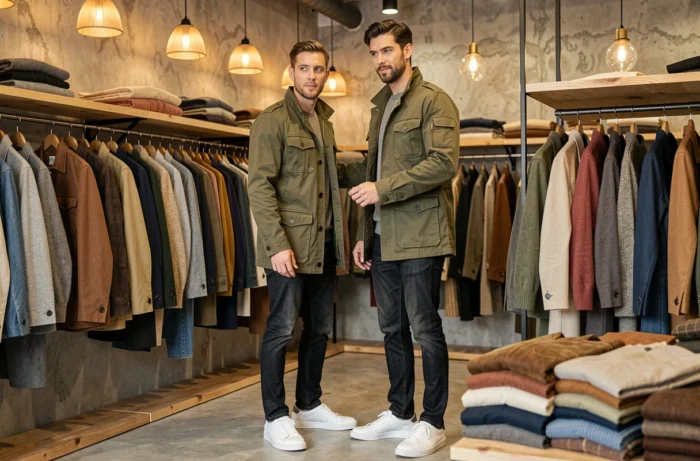
The trends for 2026 place a central focus on materials that can be seen and touched. Leather, glossy surfaces, tweed, and textured fabrics return in the majority of the season’s selections. This rise of tactile finishes reflects a shift: fashion is no longer limited to cut or color; it incorporates visual depth as a fully-fledged component of design.
Leather, in particular, transcends its usual role as a material for jackets and bags. It can be found on dresses, wide trousers, and midi skirts. When paired with softer pieces (a fine-knit sweater, a fluid shirt), it creates a texture contrast that is enough to structure an outfit without resorting to bright colors.
Building a Look Around a Single Strong Material
Rather than multiplying textures within a single silhouette, a more readable approach is to choose one expressive material and surround it with neutral pieces. A pair of grainy leather trousers with a white tee and minimalist sneakers produces a sharper effect than a total textured look.
- Soft leather works better for everyday wear than rigid leather, which requires a more formal fit and more thoughtful pairings
- Tweed and textured fabrics add visual density to monochrome silhouettes without adding real volume
- Glossy or satin surfaces capture light and function as accessories in their own right, reducing the need for jewelry or additional pieces
Signature Accessories: Brooches, Scarves, and Oversized Glasses as Personalization Levers
The return of signature accessories marks a break from the recent trend towards minimalism. Thin scarves, brooches, gloves, and oversized glasses establish themselves as strong visual markers in the 2026 selections. Their interest lies in their ability to transform a simple silhouette without altering the base of the outfit.
A brooch placed on a coat collar, a scarf tied on a bag, or generously proportioned glasses change the reading of a look in seconds. The accessory becomes the focal point that distinguishes two outfits built on the same clothes.
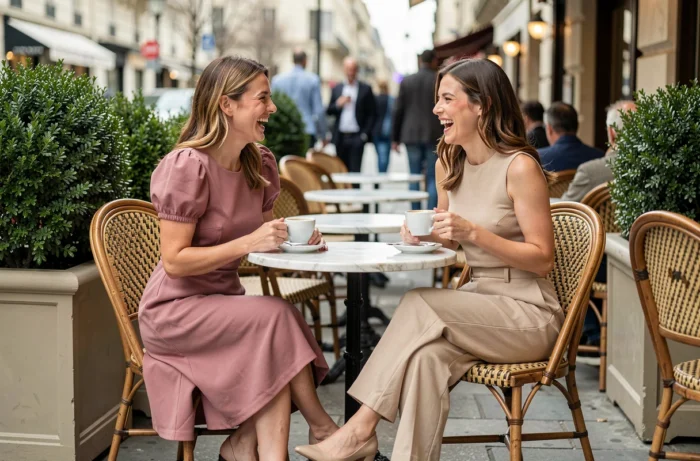
This logic aligns with the movement towards a more radical personalization of style. Influences freely intersect (retro references, streetwear aesthetics, more pronounced femininity, genderless codes) and the accessory serves as a link between registers that, on paper, do not go together.
Choosing an Accessory That Tells a Story
A signature accessory works when it carries intention. A vintage brooch inherited, a scarf brought back from a trip, glasses chosen for their shape rather than their brand: these choices create a visual narrative that standardized fast fashion pieces cannot replicate.
Fashion Colors 2026: Balancing Intensity and Neutrality
The season’s palette is sharply divided. On one side, bold colors (orange, yellow, olive green, sky blue) displayed on fluid dresses and statement pieces. On the other, the persistence of neutral tones and a discreet luxury that favors beiges, grays, and off-whites.
Choosing a side is not mandatory. The most effective method for integrating color without destabilizing an existing wardrobe is to introduce it through a single piece, worn with neutrals. A long fluid yellow dress paired with shoes and a bag in natural tones is enough to capture the chromatic energy of the season without tipping into excess.
- Bright colors work better as a single piece than in accumulation: one colored element per outfit maintains the readability of the silhouette
- Neutral tones do not mean a lack of style, as long as one plays with textures and proportions to avoid monotony
- Mixing a colored piece with textured materials (matte leather, thick knit) creates a visual depth that color alone does not produce
The long fluid dress, worn by houses like Loewe, Miu Miu, or Saint Laurent this season, illustrates this tension between expressiveness and restraint. Its simple cut absorbs color without making it aggressive, making it a good entry point to test a bold hue.
The fashion trends for 2026 offer a rare freedom of composition. The most sustainable style is built piece by piece, integrating the designers’ proposals as ingredients rather than recipes to follow. A well-chosen garment, a material with character, an accessory that says something: three elements are enough to create a silhouette that looks like no other.