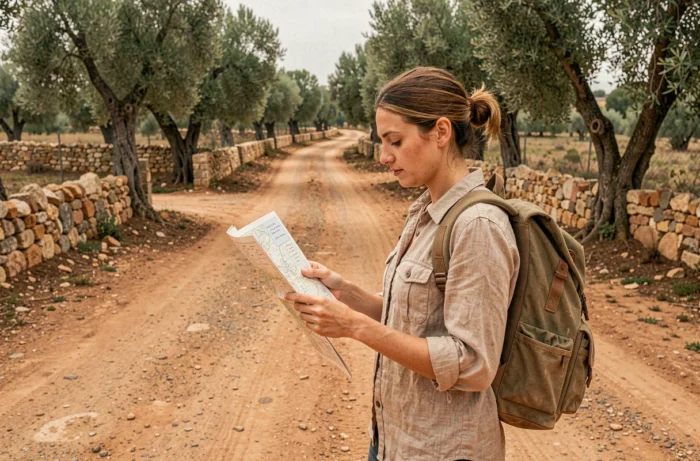
When preparing for a trip, the instinct often remains the same: compare flights, book a well-rated hotel, stack up visits. Traveling differently starts by breaking this sequence. This does not mean giving up comfort or discovery, but choosing your routes, your rhythms, and your stops with more discernment. Recent data from the European Travel Commission confirms a simultaneous increase in four responsible behaviors between 2024 and 2025: low-carbon mobility, off-the-beaten-path destinations, off-season travel, and local consumption.
Carbon cost of flights in Europe: what changes concretely from 2026
Before discussing inspiration, it is important to establish a fact that alters budgetary decisions. The European carbon quota system for aviation (EU ETS) is tightening in phases: free quota allocations for airlines were reduced by a quarter in 2024, by half in 2025, and will be completely eliminated starting in 2026.
In practice, this means that the price of intra-European flight tickets will gradually incorporate the real cost of their emissions. For a weekend in Barcelona or a round trip to Athens, the price difference with a train or overnight bus journey will narrow. We are not yet at price parity, but the trend is mechanically pushing towards land alternatives.
At the same time, the ReFuelEU Aviation regulation requires European airports to incorporate an increasing share of sustainable fuels (SAF) into the kerosene supplied. These biofuels are significantly more expensive than conventional kerosene. Airlines will pass this increase on to passengers. For those traveling in Europe, long-distance trains are becoming an economically rational choice, not just a militant gesture.
Resources like Club Voyageur allow for the exploration of itineraries designed around these new realities, combining accessible destinations and diverse modes of transport.

Slow travel and land transport: organizing an itinerary without flying
Two French travelers recently connected Paris to Phnom Penh without taking a plane. This type of land odyssey remains exceptional, but it illustrates a concrete point: rail and maritime connections exist, even over very long distances. The challenge is not the absence of links, but their clarity.
Combining train, bus, and ferry in Europe
For a journey from Paris to Istanbul, one can take the TGV to Milan, an overnight train to Belgrade, then a regional connection to Turkey. The trip takes three to four days depending on the connections. You cross five countries, sleep on the train, and eat on the platforms.
- Check available overnight trains (ÖBB Nightjet, Trenitalia Intercity Notte) and book several weeks in advance to secure reasonably priced sleeper cabins.
- Plan buffer stops of one night in an intermediate city to absorb delays without stress, especially during the summer season.
- Use ferries in the Mediterranean (Greece, Croatia, Sardinia) as integral travel segments, not just simple transfers.
Opinions vary on this point: some travelers find the connections smooth, while others report frustrating transfer breaks in the Balkans or Eastern Europe. The quality of the journey depends heavily on the season and the level of planning.
Biking as an autonomous mode of travel
Cycling tourism is not limited to marked paths in the Netherlands. Routes like EuroVelo 6 (Atlantic-Black Sea) or the Vélodyssée in France allow for covering hundreds of kilometers with light equipment. A bike loaded with panniers offers total autonomy over pace and stops.
The point not to underestimate: the logistics of the return. Folding a bike on a train or shipping it via a carrier requires foresight. It is advisable to check the baggage policies of train companies before finalizing your itinerary.
Off-season and off-flow destinations: choosing where and when to go
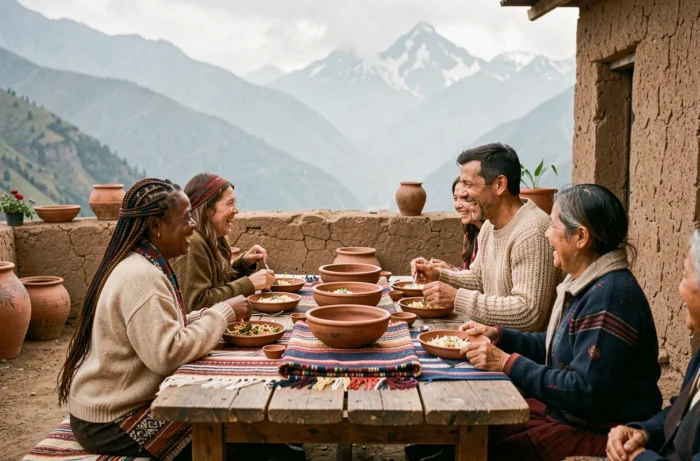
Articles on responsible travel often list the same alternative destinations. The real lever, more than the location, is the timing. Visiting Portugal in November or Sicily in February radically changes the experience: prices drop, sites are accessible without waiting in line, and interactions with locals are more natural.
Traveling off-season reduces pressure on local infrastructures and allows for the discovery of landscapes that high season does not reveal. The winter light in Greece, the daily markets of a Corsican village without tourists, the deserted hiking trails in the Dolomites in October.
Favor small-scale accommodations
Bed and breakfasts, mountain lodges, farm inns: these structures redistribute a much larger share of the price of the night to the local economy than an international hotel chain. We are talking about concrete choices at the time of booking, not grand principles.
- Look for accommodations managed by locals on specialized platforms rather than general aggregators.
- Accept a variable level of comfort: a farm inn in Cantal does not offer air conditioning, but it provides direct access to the territory.
- Prefer two nights in the same place rather than one night in four different cities. Staying allows you to understand a place, not just photograph it.
Traveling differently in France: rediscovering proximity
The Réseau Action Climat explicitly encourages prioritizing local travel. France offers a diversity of landscapes and regional cultures that many travelers know little about. Walking across the Causses, cruising the Canal du Midi on a barge, exploring the volcanoes of Auvergne independently: these experiences rival distant destinations in terms of intensity.
Proximity also presents a logistical advantage: you can leave more often, more spontaneously, with less preparation. A long weekend in the Jura or the Basque Country requires no visa, no time zone change, and no long-haul flight. The nature of the experience matters more than the distance traveled.
Traveling differently does not rely on a fixed ideology. It is a series of micro-decisions made at the planning stage: what transport, what season, how long to stay, where to sleep. Each of these decisions alters the travel footprint and, above all, the quality of what one brings back.