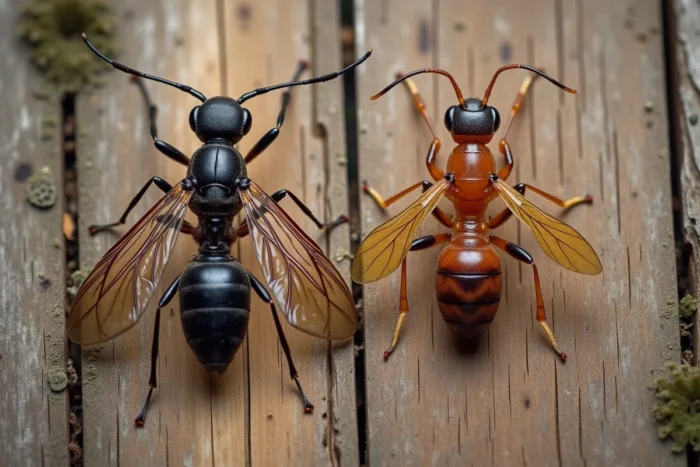
A swarm of winged insects appears near a window or a baseboard, and the question arises immediately: flying ants or termites? The answer determines the next steps, as the potential damage, treatments, and urgency differ radically between these two insects. Three simple anatomical criteria allow for a quick decision in just a few seconds, provided you know where to look.
Comparison Table: Anatomy of Flying Ants and Winged Termites
Before any detailed analysis, a quick visual examination is sufficient in most cases. The table below gathers observable morphological differences without the need for a magnifying glass or specialized equipment.
| Criterion | Flying Ant | Winged Termite |
|---|---|---|
| Antennas | Elbowed (L-shaped) | Straight, in a string of small beads |
| Wing Size | Front pair significantly larger than the back pair | Four wings of nearly identical size |
| Size (body) | Dark body, rounded abdomen | Elongated body, often lighter (beige to light brown) |
| Thorax Morphology | Thin and marked waist between thorax and abdomen | No visible narrowing, tubular silhouette |
| Behavior after Swarming | Retains its wings for a while | Quickly loses its wings, sometimes within minutes |
To reliably identify flying ants and termites, the combined observation of the antennas and the symmetry of the wings remains the most discriminating test. An insect with identical wings and straight antennas systematically points to the termite.
Antennas and Wings: The Two Clues That Determine the Diagnosis
Among the five criteria in the table, two can be used even on a moving insect or one caught between two fingers.
Elbowed Antennas vs. Straight Antennas
The antennas of the ant form a clear elbow halfway. This bend is visible to the naked eye on most common species in France. The antennas of the winged termite, on the other hand, remain straight and show a succession of small rounded segments, like a miniature pearl necklace.
This single criterion allows for the elimination of one of the two hypotheses in the vast majority of situations. It works even on a dead specimen found on a windowsill.
Asymmetry of Wings vs. Perfect Symmetry
In the winged ant, the front pair of wings is significantly larger than the back pair. The difference in length can be spotted by placing the insect on a light surface. In the termite, the four wings are practically the same size and extend well beyond the abdomen at rest.
Another clue related to the wings: after swarming, termites almost immediately lose their wings. Finding a pile of small translucent wings on the ground, near a crack or a door frame, is a serious warning sign. Ants, on the other hand, retain their wings longer after the nuptial flight.
Swarming in Spring: Why Confusion Increases with Climate
Historically, the swarming periods of the two insects were relatively staggered. Termites swarmed more in spring, while flying ants swarmed more in summer. In recent years, pest control professionals have noted that the swarming of ants and termites tends to overlap more in spring, a phenomenon attributed to climate change.
This seasonal overlap complicates visual recognition for the general public. When two types of winged insects appear within the same timeframe, the instinctive panic often overrides methodical observation.
A useful reference point: the nuptial flight of both species generally occurs after a period of rain followed by warm and humid weather. The combined heat and humidity are the main triggers. Monitoring these weather conditions in spring allows for anticipating the appearance of swarms.
Winged Ants Inside or Termites in the Walls: What the Location Reveals
The location where these insects are observed provides an additional layer of information that morphology alone does not give.
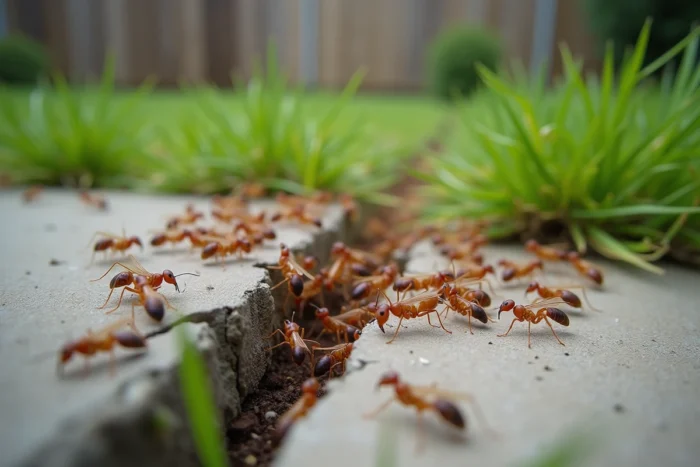
- Winged ants inside the home: their repeated presence signals a mature nest very close to the building (in the walls, under the slab, in the adjoining garden). The colony is already well established, but structural damage remains limited for most common species of ants in France.
- Winged termites inside: the situation is more concerning. Winged termites in a home may indicate a colony that has been established for several years in or under the house. Damage to wood is often already advanced when the winged reproductives appear.
- Wings fallen on the ground without a visible insect: this sign almost always points to termites, which shed their wings within minutes after landing. Dead flying ants generally retain their wings attached to their bodies.
Signs in the Wood: Clean Galleries or Accumulated Sawdust
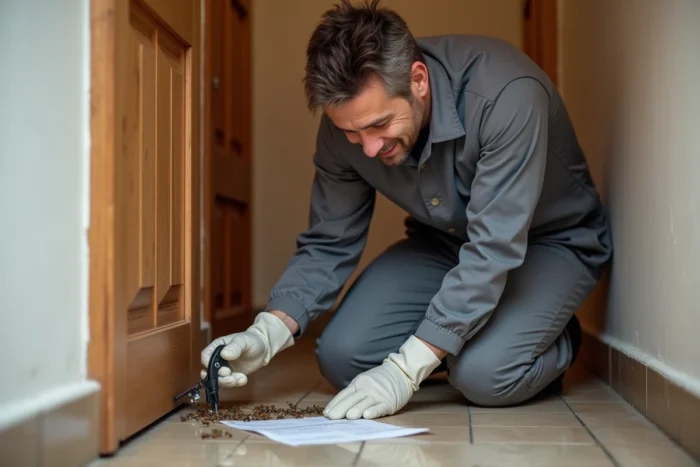
Termites consume wood from the inside and leave smooth, almost polished galleries, with no apparent residue on the surface. Carpenter ants, the only species of ant that is truly damaging to wood in France, excavate galleries but expel the sawdust outside. A small pile of fine sawdust at the foot of a beam points to the carpenter ant, not the termite.
This distinction has a direct consequence on professional diagnosis. A termite inspection expert examines woodwork with a punch or an acoustic detector, while the presence of carpenter ants is often visually detected thanks to the sawdust they expel.
Reacting After Identification: Two Situations, Two Levels of Urgency
If the observation concludes with classic flying ants (not carpenter ants), the situation does not require structural treatment. Swarming is a natural and temporary phenomenon related to the reproduction of the colony. Cleaning and sealing entry points are usually sufficient.
If the criteria point towards termites, or if there is any doubt, a professional diagnosis is quickly necessary. Termites can weaken the structure of a building without any visible external signs for years. In municipalities classified as termite risk zones, regulations also require a diagnosis when selling a property.
The distinction between these two insects relies on anatomical details accessible to everyone: antennas, wing symmetry, body shape. Capturing a specimen, placing it on a white sheet, and checking these three points takes less than a minute and can prevent either unnecessary panic or treatment delays with costly consequences.