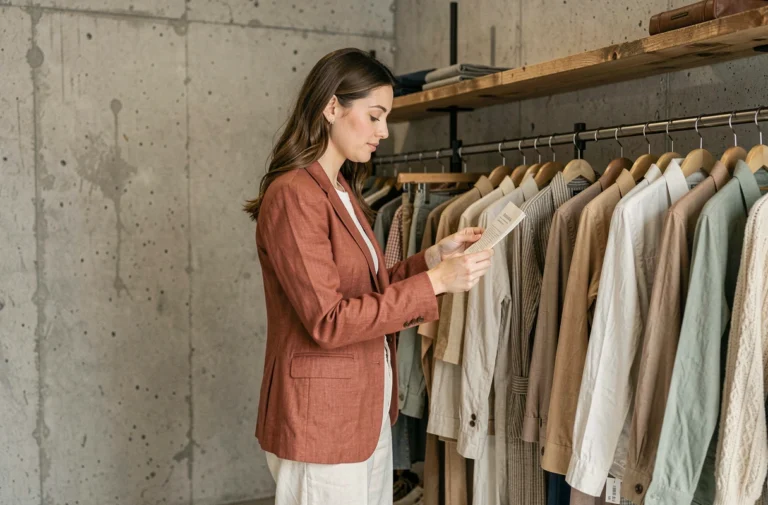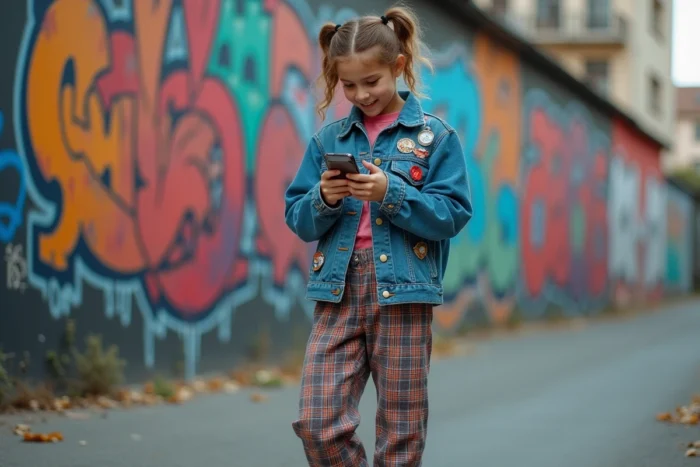
Fashion, for a teenager, operates like a system of signs. Each piece of clothing, each accessory, each color combination conveys a message about the wearer’s belonging, values, or social positioning. Understanding the impact of fashion on young people involves dissecting these mechanisms, from the role of social media to the recent French legislative changes that directly alter the textile offerings available to teenagers.
Clothing and Identity Construction in Teenagers
Fashion style serves a specific function in psychosocial development: it allows for the testing of identities. A teenager who adopts a streetwear look and then shifts to a minimalist aesthetic a few months later is not lacking in coherence. They are exploring social codes and gauging the reactions of those around them.
This exploration involves two complementary movements. The first is integration into a peer group: wearing the same brands or types of sneakers signals belonging. The second is differentiation, the need to stand out through a detail, an accessory, or an unexpected combination.
The tension between these two movements explains why teenage fashion evolves so quickly. As soon as a style becomes too widely shared, it loses its distinguishing function, and a new micro-trend emerges. Fast fashion brands have understood this well: they refresh their collections at a pace that aligns with this cycle of adoption and abandonment. To delve deeper into fashion among young people and its influence, one must also consider the weight of digital media in this acceleration.
Social Media and Textile Marketing: The Influence Circuit
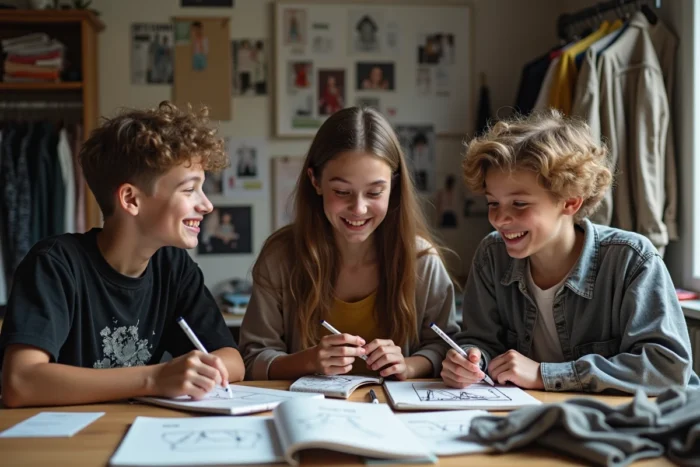
Social media is not just a simple channel for disseminating trends. It is the main engine behind them. On TikTok or Instagram, a video showing a “haul” (unpacking purchases) or an “outfit of the day” can generate tens of thousands of views in just a few hours. Teenagers consume fashion content continuously, often without clearly distinguishing between product placement and spontaneous sharing.
Influencer marketing relies on a mechanism of perceived proximity. A twenty-year-old influencer seems more accessible than a traditional advertising campaign. Teenage consumers place more trust in these recommendations than in a TV commercial because the format mimics peer conversation.
What This Changes in Brand Relationships
Brand loyalty becomes volatile. Young consumers navigate between fast fashion brands, online thrift stores, and niche brands spotted on social media. The criteria for choice are no longer just price or textile quality, but the social signaling value that the clothing provides at the moment of purchase.
This logic pushes the textile industry to shorten production cycles. Ultra-fast fashion brands offer thousands of new items each week at very low prices. The environmental and social cost of this model is considerable, but it often remains invisible to the end consumer.
French Law on Ultra Fast Fashion: What Changes for Young People
France is on the verge of becoming the first country to legislate specifically against ultra-fast fashion. A proposed law currently under adoption includes three direct measures:
- A legal definition of ultra-fast fashion, which for the first time regulates this segment of the textile market under French law.
- The prohibition of any form of advertising for products in this category, which will directly affect influencer campaigns on social media.
- The establishment of progressive financial penalties through the extended producer responsibility (EPR) system, a mechanism that will increase the cost of bringing these low-priced garments to market.
For teenagers used to buying pieces for just a few euros, the effect will be tangible. Prices are expected to rise, and the visibility of these brands online will significantly decrease with the removal of advertisements.
Awareness in School Programs
The same legislative text includes a component for raising awareness about sustainable consumption within the school framework. The goal is to equip young people with the tools to understand the life cycle of a garment, from the production of textile fibers to the end of the product’s life.
This type of education changes the perception of fashion. When a teenager knows that a t-shirt sold at rock-bottom prices involves degraded working conditions and a disproportionate carbon footprint, the choice of clothing also becomes an ethical choice.
Second-Hand and Circular Fashion: A Distinct Style
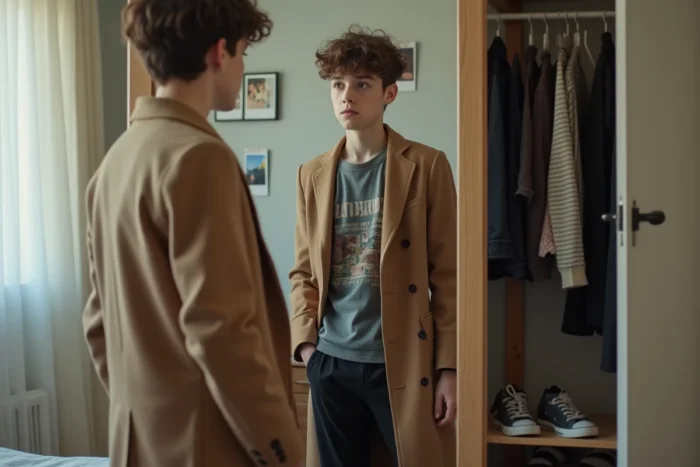
The second-hand market is experiencing rapid growth in France, largely driven by young consumers. Buying from thrift stores or resale platforms is no longer seen as a default choice. It has become a distinct style marker.
The appeal of second-hand items can be explained by several factors. Price remains a lever, but the aspect of rarity is equally important: a vintage piece is by definition unique, satisfying the need for differentiation mentioned earlier. The circular luxury segment is also developing, with high-end brands incorporating resale into their own circuit.
Circular fashion changes the relationship with clothing: instead of being a disposable item, textile products become goods that are kept, transformed, or resold. For teenagers, this also opens up a space for creativity (customization, upcycling) that enhances the expressive dimension of style.
Social Pressure and Well-Being: The Flip Side of Style
The downside of this omnipresence of fashion in young people’s lives is constant pressure. Social media creates a continuous stream of comparison. A teenager sees hundreds of outfits worn by peers or influencers every day, which can fuel feelings of inadequacy.
The pressure to renew one’s wardrobe also generates financial tensions within families. When clothing becomes the primary vector of social status in middle or high school, the refusal or inability to follow trends can lead to a form of exclusion.
Thus, the challenge for teenagers is not limited to choosing an outfit. It involves navigating between self-expression, group belonging, and economic constraints, in an environment where the pace of trend renewal has never been so rapid. French legislative changes and the rise of circular fashion offer alternatives, but they do not eliminate the fundamental tension between the desire for conformity and the need for uniqueness, which remains at the heart of adolescence.