Giving a check to newlyweds is something everyone knows how to do. Finding the right words to accompany it is another matter. The little note slipped into the envelope will be read aloud, kept in a memory box, and sometimes reread years later. It’s worth crafting each sentence as carefully as one would a handmade gift.
A wedding message reread ten years later: what ages well
Have you ever found an old greeting card at the bottom of a drawer? Some phrases make you smile, while others make you cringe. The difference rarely lies in literary style. It lies in the sincerity of the message and the precision of the memory evoked.
A message that stands the test of time almost always contains a personal detail identifiable by the couple. A place, a date, a nickname, an anecdote about the proposal. This detail anchors the text in a shared reality. Without it, the message resembles any commercial card.
Writing a text to accompany a wedding check also requires choosing a consistent tone. Mixing a philosophical quote, a joke about married life, and a formal polite phrase in the same message creates a disjointed effect. It’s better to maintain a single tone from start to finish.
Conciseness also protects the text from aging. Three well-chosen sentences make a stronger impact than ten conventional lines. The newlyweds will read this note in front of their loved ones: every sentence counts, and every unnecessary word dilutes the emotion.
Message tone for weddings: choose based on your relationship with the couple
The tone of the message depends on one criterion: your actual closeness to the newlyweds. A childhood friend does not write like a work colleague. An uncle does not address the couple the same way a witness would.
Message for a close couple
With a friend or family member you see regularly, using the informal “tu” is perfectly fine. You can mention a specific memory, a funny moment, or a character trait of the couple.
Example: “I remember the night you told me you had found the right person. You had that smile that was impossible to hide. Today, that smile is official. Enjoy every day together.”
The personal anecdote makes the message unique and impossible to confuse with a generic text found online.
Message for acquaintances or colleagues
The formal “vous” and a sober tone are more suitable in this case. There’s no need to force emotion. A direct congratulatory phrase followed by a sincere wish is more than enough.
Example: “Congratulations to both of you on this beautiful union. May this new life together bring you as much happiness as you deserve.”
Intergenerational message
When a grandparent or older parent writes the note, sobriety and warmth work better than humor. Overly familiar phrases sound false in this context. A simple sentence about the joy of seeing the couple united, possibly a kind piece of advice without moralizing, strikes the right balance.
Expressions to avoid on a wedding card
Some writing habits produce texts that everyone forgets. Here are the most common pitfalls:
- Famous quotes without any personal addition. “Love is patient, love is kind” copied as is says nothing about your relationship with the couple. If you insist on a quote, at least add two of your own sentences before or after.
- Jokes about marriage like “golden prison” or “goodbye freedom.” This type of humor ages very poorly and often makes the couple uncomfortable in front of their family.
- Expressions that mention the amount of the check, even indirectly. “A little something for your cozy nest” or “enough to fill the piggy bank” draw attention to money rather than the gesture. The note should make you forget that it accompanies a check.
- Messages that are too long, occupying both the front and back of the card. The limited space of a card necessitates conciseness, which is an advantage.
Examples of elegant texts to accompany a wedding check
Rather than listing dozens of interchangeable templates, here are three concrete directions to adapt to your situation.
Sober and warm text
“Congratulations on this beautiful day. May your life together be filled with projects, laughter, and complicity. With all our affection.”
This format works in almost all contexts. It takes no risks, remains sincere, and is suitable for both a friend and a distant cousin.
Text with a personal memory
“The first time I saw you together, I knew something beautiful was beginning. Today you celebrate it in front of those who love you. This little gesture is to help you build the next chapter of this beautiful story.”
The memory (“the first time I saw you together”) gives the message its unique character. You can replace this opening with any real moment: a trip, a meal, an evening.
Text with a touch of controlled humor
“They say marriage is a long journey. Here’s to funding a stopover or two. Congratulations to you both, enjoy every step together.”
The humor remains light and kind. No mockery of the couple or marriage as an institution. The travel metaphor allows mentioning the check without heaviness.
Presentation of the card: details that change perception
The text isn’t everything. The way you present your note influences how it will be received.
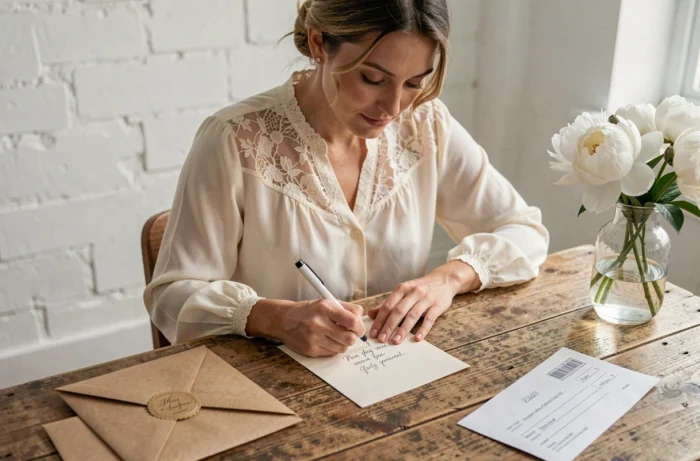
- Write by hand, even if your handwriting isn’t perfect. A handwritten card has an emotional value that no printed font can replicate.
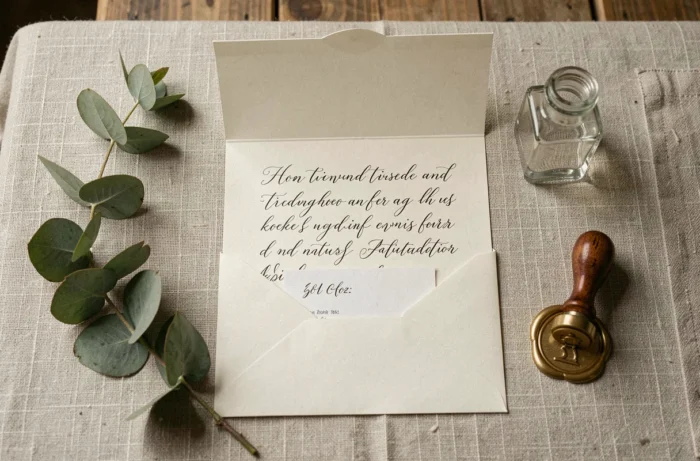
- Choose a simple card rather than one overloaded with gold embellishments. The text stands out better on a plain background.
- Sign with the first names of the whole family if the check comes from a household. This adds warmth to the message and shows that the gesture is collective.
The couple may keep this card for years. Quality paper, careful writing, and an authentic message create a whole that the newlyweds will enjoy rediscovering. The best wedding card is one that brings a smile upon rereading, not one that impresses at first glance.